

What is Vinyl Cove Base? Flash Cove Installation and Welding Guide
Walk into any commercial kitchen, hospital corridor, or healthcare facility and look at the base of the walls. Chances are the flooring doesn't stop at the wall — it curves up it, forming an integrated, seamless baseboard. That's vinyl cove base, also called flash cove or integral cove base, and it's one of the most demanding installations in the resilient flooring trade.
This guide covers what vinyl cove base is, where and why it's specified, how to install it correctly, and how to heat weld the seams — including the tight, confined areas under cabinets, toe kicks, and behind toilets that separate competent installers from exceptional ones.
What is Vinyl Cove Base?
Vinyl cove base — also referred to as flash cove, integral cove, or coved base — is a flooring installation method where sheet vinyl or linoleum is extended up the wall to a specified height, typically 4 to 6 inches, forming a continuous, curved baseboard that is part of the floor itself rather than a separate applied piece.
The cove is formed at the floor-to-wall transition using a cove stick — a shaped wooden or plastic fillet that creates the curved radius the vinyl wraps around. The material runs up the wall, is trimmed at the top cap, and the entire surface from floor to cap is one continuous piece of resilient flooring with no interruption, no gap, and no seam at the floor-wall junction.
This is fundamentally different from applying a separate vinyl base strip over a standard flooring installation. Integral cove base is part of the floor system — not an accessory applied after the fact.
Why Vinyl Cove Base is Specified
Vinyl cove base is the standard in any environment where hygiene, moisture control, and ease of cleaning are non-negotiable requirements.
Healthcare facilities — hospitals, clinics, operating rooms, and patient areas specify integral cove base because it eliminates the floor-wall junction where bacteria, moisture, and contaminants accumulate in standard installations. There is no gap for mop water to seep under, no crevice for pathogens to harbor, and no joint for cleaning chemicals to degrade over time. Many healthcare flooring specifications mandate coved base and heat-welded seams as a condition of infection control compliance.
Commercial kitchens and food service — health codes in most jurisdictions require coving at floor-wall junctions in food preparation areas. Integral vinyl cove base meets this requirement while also handling the moisture, grease, and heavy cleaning protocols that commercial kitchen floors endure.
Pharmaceutical and laboratory environments — cleanroom and laboratory specifications often require fully welded resilient flooring systems with integral cove base to maintain sterile or controlled environments.
Institutional and education facilities — schools, universities, and government buildings specify coved base for durability and ease of maintenance. A properly installed coved floor with welded seams can last decades without lifting, peeling, or requiring base replacement.
Tools and Materials Required
Tools: - Cove stick (wood or plastic fillet, typically 1" radius) - Adhesive spreader and cove applicator brush - Heat gun — Leister Triac ST or Hot Jet S recommended - Turbo Cove Groover — 5mm U-blade - L-Welding System with Turbo Detail Nozzle for Hot Jet S - Universal Turbo Nozzle for flat floor seams - Turbo Roller Guide for flat seam runs - Coving Trimming Handle with X-Acto blades for skiving cove areas - Quarter moon knife for floor-level skiving - Turbo Plane for flat seam skiving - Straight edge, chalk line, scribing tool - 100 lb floor roller
Materials: - Sheet vinyl — ensure sufficient material width to cover floor area plus cove height plus overlap - Cove stick — sized to match specified cove radius - Manufacturer-specified adhesive (floor and wall coverage) - Matching welding rod - Top cap or trim strip for the cove termination
Step 1 — Planning and Layout
Cove base installations require planning before a single piece of material is cut. Mistakes in layout are expensive — sheet vinyl is costly, and miscalculating the material needed for cove coverage wastes significant yardage.
Calculate material requirements: Add the cove height to your floor coverage when calculating material. For a 4-inch cove height, add at least 6 inches to the room dimension at each coved wall to account for the cove height, the radius of the cove stick, and a working margin. On rooms with coved base on multiple walls, plan seam placement carefully — seams in cove areas require more technique than flat floor seams and should be minimized where possible.
Identify confined areas early: Walk the perimeter and identify every toe kick, cabinet base, toilet, and obstruction where the cove will need to be welded in a confined space. These areas require the L-Welding System and dictate the sequencing of your installation. Plan to address them before adjacent cabinetry or fixtures are installed where possible — access makes the difference between a clean weld and a compromised one.
Mark the cap line: Snap a chalk line at the specified cove height around the perimeter of the room. This is your trim line — consistent height produces a professional finished appearance. Inconsistent cap height is one of the most visible signs of an inferior cove installation.
Step 2 — Subfloor and Wall Preparation
Both the floor and wall surfaces receive adhesive in a cove installation, so both need to be clean, flat, and properly prepared.
Floor preparation follows the same requirements as any sheet vinyl installation — moisture tested, flat to within 3/16" over 10 feet, free of contaminants. See our How to Install Sheet Vinyl Flooring guide for full subfloor preparation detail.
Wall preparation: The wall surface behind the cove must be smooth, structurally sound, and free of paint buildup, wallpaper, or texture that would prevent adhesive bonding. Skim coat or sand as needed. On masonry walls, check for efflorescence — salt deposits that will prevent adhesive from bonding — and treat before proceeding.
Cove stick installation: The cove stick is glued into the floor-wall junction at a 45-degree angle to create the radius the vinyl wraps around. Use the same adhesive specified for the flooring or a dedicated cove stick adhesive. Press firmly and allow to fully set before proceeding — a cove stick that moves during installation creates bubbles and voids at the radius.
On outside corners, miter the cove stick to 45 degrees. On inside corners, cope or miter — either works, but the joint must be tight with no gap for the vinyl to telegraph through.
Step 3 — Cutting and Fitting the Material
Rough cutting: Cut the sheet vinyl with sufficient excess to cover the floor area, wrap the cove stick, run up the wall to above the cap line, and allow for scribing adjustments. On a 4-inch cove, budget at least 8–10 inches of extra material per coved wall.
Scribing to the wall: For the top cap line, use a scribing tool or compass set to the cove height to transfer the wall profile onto the material. Cut along the scribed line — this produces a cap that follows the wall contour exactly, which matters on walls that aren't perfectly straight.
Inside corners: Inside corner cuts require relief cuts in the material so it can fold around the corner without buckling. Score the back of the material at the corner transition to help it bend cleanly around the radius.
Outside corners: Outside corners require a gusset cut — a V-shaped relief cut in the material at the corner so it wraps around the outside radius without creasing or folding. The cut must be precise — too wide and the corner gaps; too narrow and the material bunches.
Under toe kicks and cabinets: Cut the material to fit flush under the toe kick face. Leave enough material to cove up the back wall behind the toe kick — this is where confined-space welding becomes necessary and where the L-Welding System is essential.
Step 4 — Adhesive Application
Cove base installations require adhesive on both the floor and the wall surface behind the cove.
Floor adhesive: Apply per the manufacturer specification using the correct notch trowel. Allow proper flash time before laying the material.
Wall adhesive: Use a brush or cove applicator to coat the wall surface from the floor to above the cap line. Standard trowels don't reach the wall effectively and leave inadequate coverage. The adhesive must cover the entire wall area behind the cove — voids behind the cove create bubbles and eventual delamination.
Cove stick coverage: Ensure adhesive covers both the cove stick faces and the transition zone where floor meets cove. This area is under constant stress from foot traffic and cleaning equipment — inadequate adhesion here is the most common cause of cove failure.
Rolling: Once the material is positioned, roll the flat floor area with a 100 lb roller. For the cove area, use a hand roller or seam roller to press the material firmly against the wall and over the cove stick radius. Work out any air pockets from the base of the cove upward.
Step 5 — Grooving the Cove Seams

Grooving flash cove seams is the most technically demanding part of the entire installation. The combination of a vertical surface, limited visibility, tight geometry, and confined spaces makes standard groovers impractical or impossible in many areas.
On the flat floor seams running into the cove: Use the Master Turbo Groover for the flat run. Its automatic 45-degree blade angle and subfloor-tracking design produce a consistent groove right up to the point where the seam transitions to the cove.
On the cove itself: The Turbo Cove Groover is specifically designed for this surface. Its guiding fin — positioned next to the 5mm U-blade — tracks the seam even when visibility is limited, preventing the groover from jumping out of the seam and gauging the surrounding material. This is the only hand groover purpose-built for flash cove grooving.
Under toe kicks and cabinets: This is where most installers struggle. Standard groovers physically cannot reach under a toe kick with enough control to produce a clean groove. The Turbo Cove Groover's compact profile and guiding fin make it the right tool here — the fin keeps the blade on the seam even when you're working by feel rather than sight.
Groove depth on cove seams: Maintain the same two-thirds depth rule as flat seams. The vertical orientation changes the physical challenge but not the technical requirement — a shallow groove produces a weak weld regardless of surface orientation.
Step 6 — Welding the Cove Seams
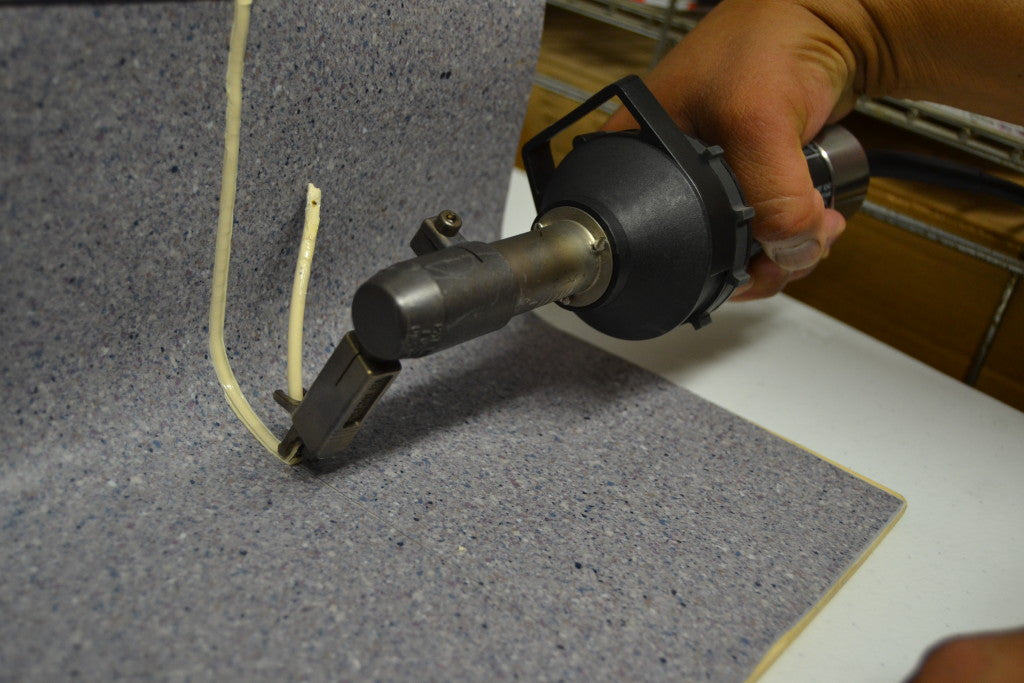
Welding flash cove seams requires different tooling than flat floor welding. Heat management and access are the two primary challenges — gravity works against you on vertical surfaces, and confined spaces limit gun movement and visibility.
For flat floor seams: Use the Leister Triac ST fitted with the Universal Turbo Nozzle. The Universal Turbo Nozzle pre-heats both the substrate and the welding rod simultaneously for a maximum-strength bond, works on all materials without scorching, and is the fastest nozzle in the industry for flat seam work. Add the Turbo Roller Guide to maintain the correct welding angle and distance across long runs, reducing wrist strain and improving consistency.
For long straight seam runs on large commercial floors, the Chiquita automatic welder or Concorde manual machine delivers even greater stability and eliminates the variability of hand welding entirely.
For flash cove seams: Switch to the Leister Hot Jet S fitted with the L-Welding System and Turbo Detail Nozzle. The L-Welding System was specifically engineered for flash cove welding — it redirects the heat gun's output at the angle needed to feed the welding rod into a vertical groove while keeping the gun body clear of the wall. The Turbo Detail Nozzle's air jet design pre-heats the welding rod and flooring material for a strong bond and can be used on urethane and non-urethane materials without scorching.
Under toe kicks, cabinets, and behind toilets: This is where the L-Welding System's value is most apparent. In spaces where a full-size gun cannot be angled correctly, the L-Welding System allows you to complete a professional weld from an access angle that would be impossible with standard tooling. Take your time in these areas — rushing confined-space welds is the most common cause of flash cove weld failures.
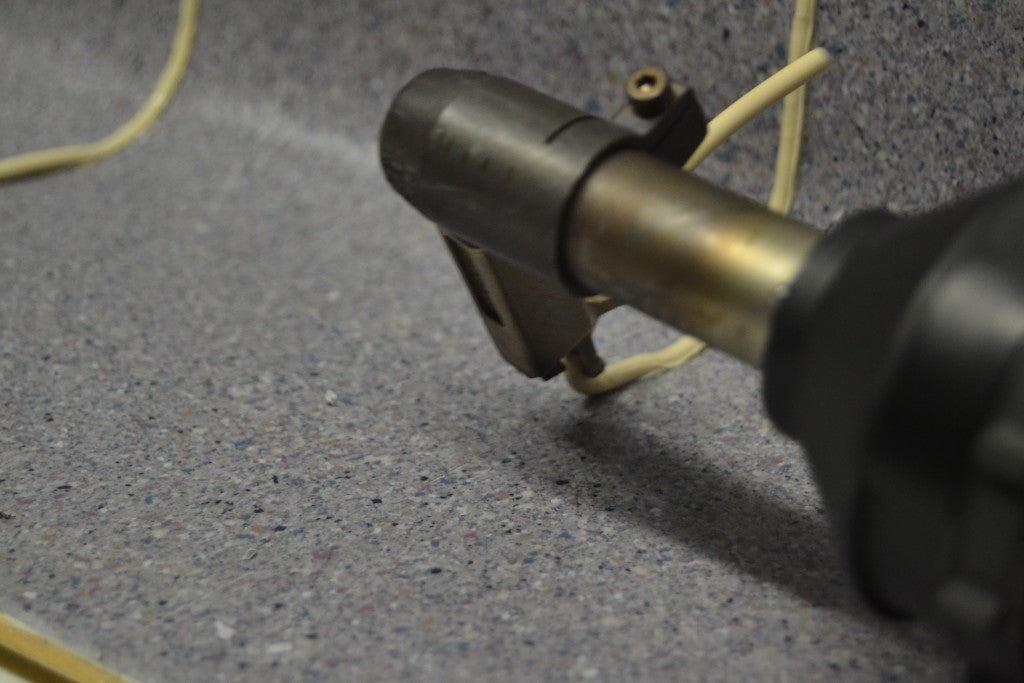
Temperature: Standard sheet vinyl flash cove: 350–450°C. Allow the welding rod to fully fuse before moving — cold spots on vertical surfaces are harder to detect during welding and show up clearly after skiving.
If the rod runs out mid-seam: Use the Turbo Splicer to join a new length of rod exactly where the last one ended, producing a continuous weld without a visible joint.
Step 7 — Skiving the Cove Seams
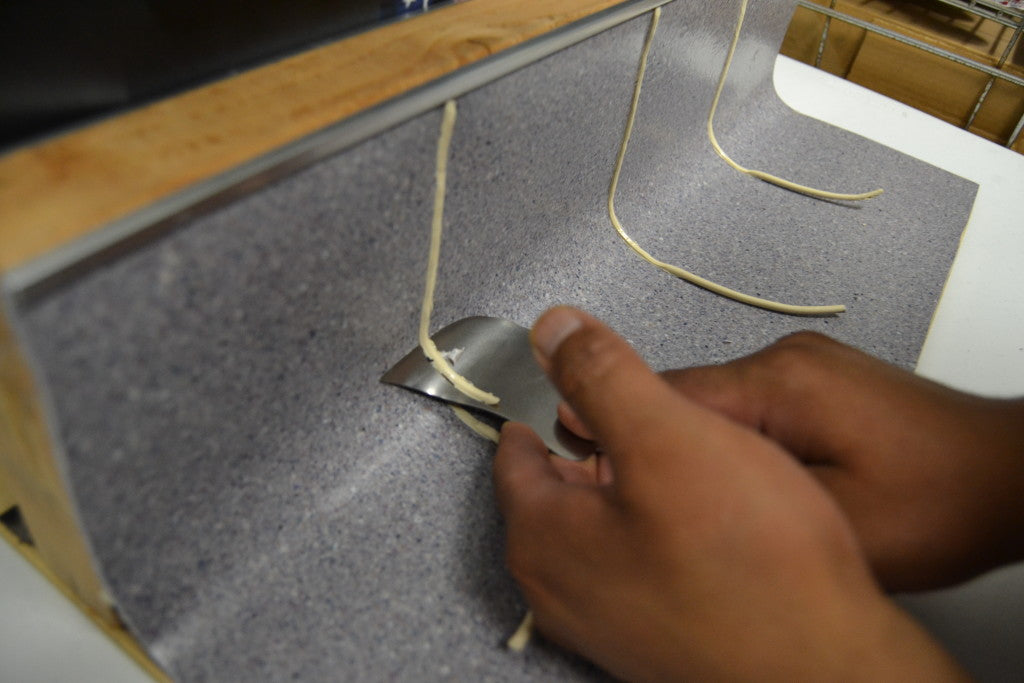
Skiving flash cove seams requires different technique than flat floor skiving. The vertical surface, the curved cove radius, and the tight geometry of corners all require tools and approaches that standard skiving tools can't handle.
On the flat floor seam: Use the Turbo Plane after the weld has completely cooled for a clean, flush result in a single pass. For the two-pass method, use a quarter moon knife while the rod is still slightly warm, then finish with a second pass once fully cooled.
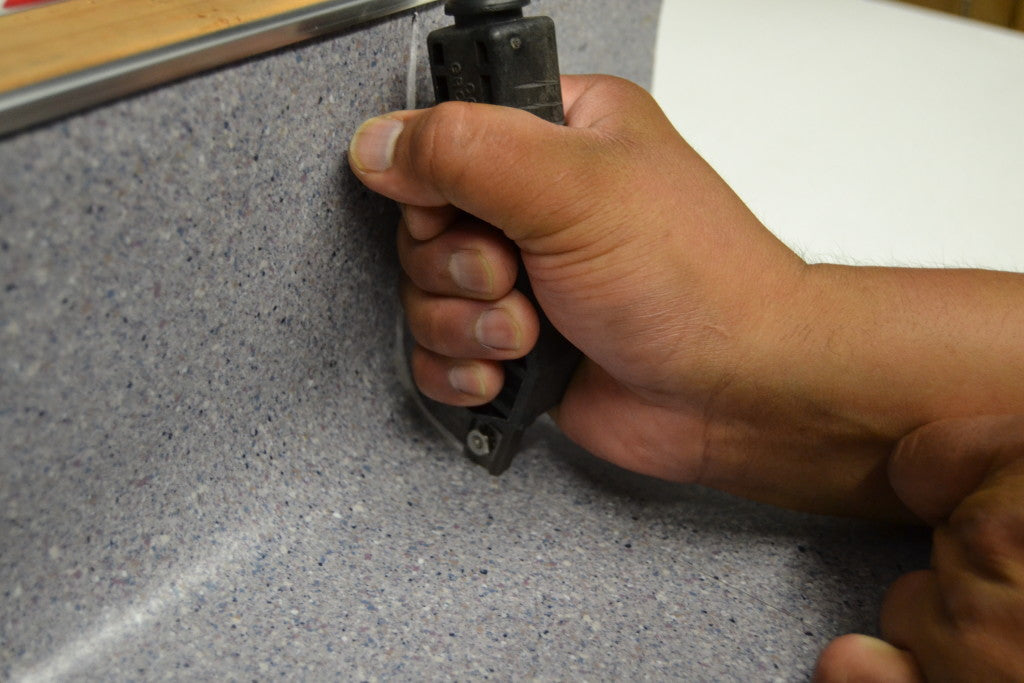
On the cove surface: Use the Coving Trimming Handle with X-Acto 1/2" square blades. The Coving Trimming Handle provides the extra grip and control needed on the curved cove surface where a standard skiving knife can't be held at a consistent angle. Skive in alternating directions — upward strokes followed by downward strokes — to feather the rod flush with the cove surface.
Inside and outside corners: Use the X-Acto blade for inside corners where the Turbo Plane and quarter moon knife can't follow the geometry. Take short, careful strokes — corners are the area most likely to show a proud rod edge after skiving.
The most common cove skiving mistake: Skiving the cove rod while it's still warm. Cove welds retain heat longer than flat seams because the vertical surface allows less heat dissipation. Wait until the rod is completely cool before skiving — a warm rod drags and tears rather than cutting cleanly.
Common Flash Cove Mistakes
Underestimating material requirements. Always calculate cove height into your material order. Running short on a cove installation mid-job is a costly problem.
Moving the cove stick before the adhesive sets. A cove stick that shifts during installation creates voids and bubbles at the radius that are visible in the finished floor.
Inadequate wall adhesive coverage. Voids behind the cove delaminate over time. Brush the entire wall surface — don't rely on a trowel to reach the wall adequately.
Using the wrong groover on the cove. Standard hand groovers don't track cove seams reliably. The Turbo Cove Groover's guiding fin is what makes a clean groove possible in confined spaces.
Welding cove seams with flat surface tooling. A standard nozzle on a vertical surface produces uncontrolled heat spread and inconsistent rod flow. The L-Welding System exists because flat surface tools are fundamentally inadequate for vertical cove welding.
Poor gusset cut geometry on outside corners. A gusset cut that's too narrow bunches the material at the fold. Too wide and the corner gaps. Both are visible failures that can't be fixed after adhesive sets. Measure the gusset opening against the cove height before cutting — and cut once.
Skiving warm rod on the cove. The cove surface retains heat longer than the floor. Always wait for full cooling before skiving cove welds.
Tools Referenced in This Guide

- Turbo Cove Groover — purpose-built for flash cove grooving, guiding fin tracks seam in confined spaces, uses 5mm U-blade
- Master Turbo Groover — flat floor seams running into cove transitions
- L-Welding System — flash cove welding, toe kicks, cabinets, behind toilets
- Turbo Detail Nozzle for Hot Jet S — part of L-Welding System, pre-heats rod and material, no scorching on urethane or non-urethane materials
- Universal Turbo Nozzle — flat floor seams, all materials, no scorching, fastest nozzle in the industry
- Turbo Roller Guide — correct welding angle and distance on flat seam runs
- Turbo Splicer — joins rod mid-seam without a visible joint
- Turbo Plane — flat seam skiving
- Coving Trimming Handle with X-Acto Blades — cove surface skiving, corners, and detail areas
- Chiquita — automatic welder for long straight commercial floor seams
- Concorde — manual welding machine for large commercial floors
Questions?
Flash cove is the installation technique we know best. If you have questions about a specific job, material, or confined space challenge, call us at 714-522-4290 or email info@turboheatweldingtools.com. We have professional installers on staff who have seen every variation of this installation and are happy to help.
Have a question?
Call 714-522-4290 or email info@turboheatweldingtools.com — real installers, real answers.